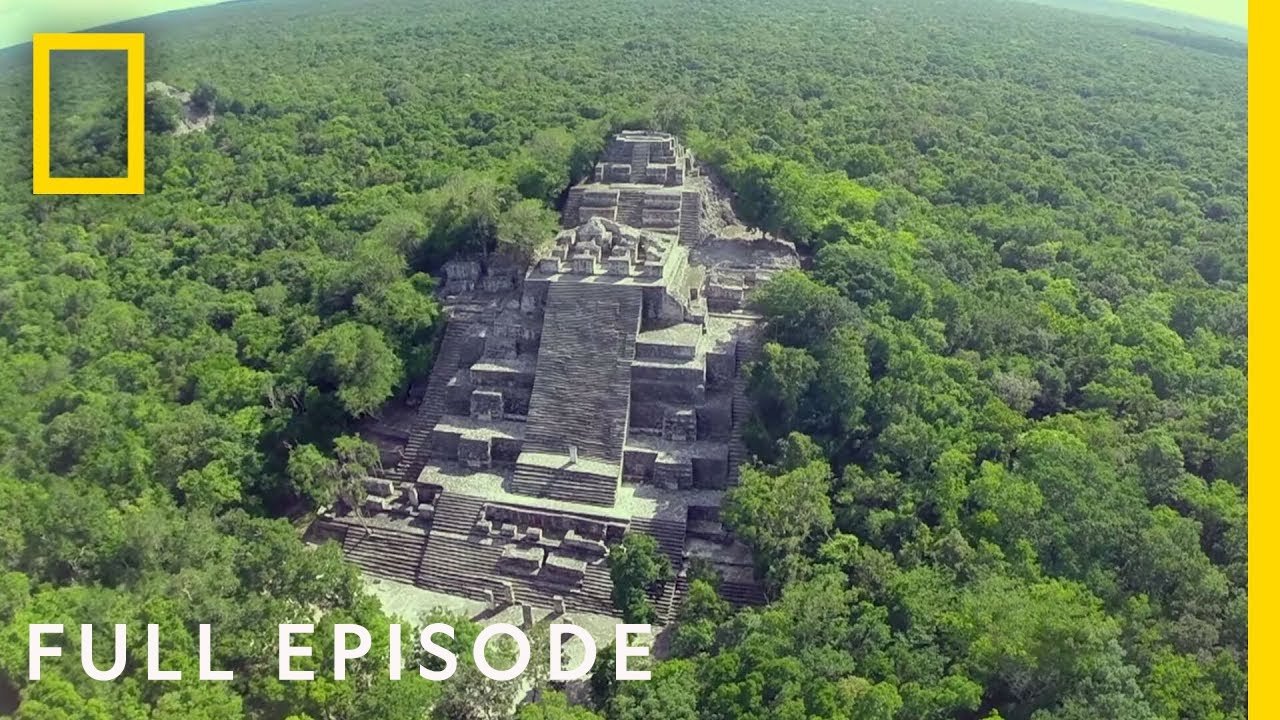
The documentary Lost World of the Maya offers a groundbreaking look into one of the most advanced and mysterious ancient civilizations in human history. Presented by National Geographic, the episode reshapes everything we thought we knew about the Maya—revealing a vast, interconnected world hidden for centuries beneath dense jungle canopies.
Far from being isolated city-states swallowed by nature, the Maya emerge here as master engineers, planners, and environmental strategists whose achievements rival those of any ancient civilization.
Rewriting Maya History
For decades, historians believed the Maya civilization consisted of scattered ceremonial centers surrounded by small farming villages. Lost World of the Maya completely overturns this idea.
Using advanced laser-mapping technology, researchers uncover evidence of:
-
Massive cities hidden beneath rainforest vegetation
-
Elevated highways connecting urban centers
-
Sophisticated water-management systems
-
Defensive fortifications suggesting organized warfare
The Maya world, once thought fragmented, is revealed as a densely populated and highly connected civilization that supported millions of people.
The Technology That Changed Everything
At the heart of the documentary is the use of LiDAR (Light Detection and Ranging) technology. By firing millions of laser pulses through jungle canopies, scientists can digitally remove vegetation and reveal what lies beneath.
What LiDAR uncovers is astonishing:
-
Pyramids larger than previously known
-
Complex road networks stretching for miles
-
Agricultural terraces carved into hillsides
-
Hidden fortresses and city walls
These discoveries prove the Maya dramatically reshaped their environment rather than living passively within it.
The Scale of Maya Civilization
The episode reveals that Maya cities were not small or ceremonial—they were vast metropolitan centers with:
-
Dense residential zones
-
Administrative and political hubs
-
Marketplaces and industrial areas
-
Religious monuments integrated into daily life
This challenges long-held beliefs that large-scale urbanization only occurred in other ancient civilizations like Rome or China. The Maya, it turns out, were equally capable of sustaining large populations through innovation and planning.
Engineering the Jungle
One of the most impressive revelations in Lost World of the Maya is how the civilization mastered its environment.
The documentary shows how the Maya:
-
Built reservoirs to store rainwater during dry seasons
-
Created canal systems to prevent flooding
-
Developed raised-field agriculture to increase crop yields
-
Engineered terraces to prevent soil erosion
Rather than destroying the jungle, the Maya worked with it—creating a carefully balanced system that supported long-term survival.
War, Power, and Protection
The discoveries also reveal a more militarized Maya world than previously believed. Fortified cities, walls, and defensive structures suggest constant conflict between rival kingdoms.
This challenges the older romantic image of the Maya as purely peaceful astronomers and priests. Instead, the documentary presents a complex society where power, politics, and warfare were deeply intertwined with religion and governance.
Why the Maya Declined
While the episode does not offer a single explanation for the collapse of the Maya civilization, it presents compelling evidence pointing to multiple factors:
-
Climate change and prolonged droughts
-
Overpopulation stressing resources
-
Political instability and warfare
-
Environmental overuse
The collapse was not sudden—it was a gradual unraveling of systems stretched beyond sustainability.
Why This Discovery Matters Today
Lost World of the Maya is not just about the past—it carries powerful lessons for the present.
The Maya demonstrate:
-
How advanced societies can thrive in challenging environments
-
How innovation can support massive populations
-
How environmental balance is crucial for long-term survival
At the same time, their decline serves as a warning about the consequences of environmental stress and societal strain—issues still relevant in the modern world.
A New Chapter in Human History
This National Geographic documentary marks one of the most important archaeological revelations of the 21st century. It transforms the Maya from a civilization of mystery into one of extraordinary complexity, intelligence, and scale.
The jungle did not erase the Maya—it protected their legacy, waiting for the right moment to reveal it.
Final Thoughts
Lost World of the Maya is more than a documentary—it is a rediscovery of human potential. Through cutting-edge technology and careful research, it restores the Maya to their rightful place among the world’s greatest civilizations.